SEGMENT 1
Cartographies of interrupted stories
REFERENCES
MICHEL DE CERTEAU
A invenção do cotidiano (Vozes, 1998)
[The practice of everyday life]
–
MICHEL MAFFESOLI
A contemplação do mundo (Artes e Ofícios, 1995)
[The contemplation of the world: figures of community style – glossy only]
No fundo das aparências (Vozes, 1996)
[À l’ombre des apparences – original title]
MEDIA COVERAGE
Espaço público ganha ressignificação e valor afetivo na pandemia
Reportagem sobre a importância da ressignificação dos espaços públicos no Brasil
In this context, the Global Health Crisis of COVID-19 changed how people interact in public spaces. Consequently, this research’s approach to Rio de Janeiro’s public spaces needed (re)consideration, since fieldwork was impossible during quarantine.
Before the pandemic, the initial umbrella project aimed to map Rio de Janeiro’s urban ambiances, especially places that support sociability. It also sought to define the concept of Spatial Empathy, developed by LASC/UFRJ since 2014. When the pandemic began, in-person research became impossible. The proposal and its methodology were restructured. The focus shifted to collecting and condensing narratives and mapping spaces valued as “home” and “place.” This was done with a remote, online survey distributed to many informants. At this stage, a research segment titled “Cartographies of interrupted stories” began. It sought stories of urban experiences changed or disrupted by the Pandemic.
The team collected data with targeted electronic form questions, gathering images, texts, and impressions. They compared responses from more than 240 informants in the greater metropolitan area of Rio de Janeiro. Their answers enabled exploration of georeferenced data and feelings such as longing, hope, disdain, or fear. The goal was to find stories interrupted by the Pandemic and the lack of conviviality in the “new pandemic city.” However, the stories did not truly interrupt. Even amid insecurity, public space continued to offer encounters, enjoyment, and opportunities for positive urban experiences.
With safety measures in place, the research team adopted a new approach. They mapped attributes and sensations that reveal urban vitality and strengthen social bonds, even during exceptional times. Instead of measuring only physical urban space, the team examined topological, situational, everyday-use, and self-expression spaces. These spaces connect different times, relationships, and enduring elements, as De Certeau (1998) discusses. Respondents also highlighted spaces of transgression and lived experiences between public and private realms, as Maffesoli (1995) describes.
The city is a human invention; it means more than just its location, population density, or regulatory frameworks. Every city exists within a network of social, cultural, and economic relations. It is woven by daily stories and overlapping narratives (often fabulous) of lives that help construct it. This stage of the research showed that cities seek to re-signify themselves after major events. Cultural bias deeply interferes with this change.
In addition to scientific outputs, the team’s research appeared in Radar Imobiliário, published by ESTADÃO. On 12/26/2020, #JornaldaCultura mentioned LASC/PROARQ/UFRJ. The report focused on how the research prompted the re-signification of public spaces in Brazil during and after the 2020 pandemic, citing “Cartography of interrupted stories.”
Methodology
Electronic survey
Participatory georeferencing
Use of Google Forms and the Vicon SAGA platform (Leonardo Muniz) to map affective responses in urban space.
Field visits and ethnographic sketches
Phase 1
PRODUcTION
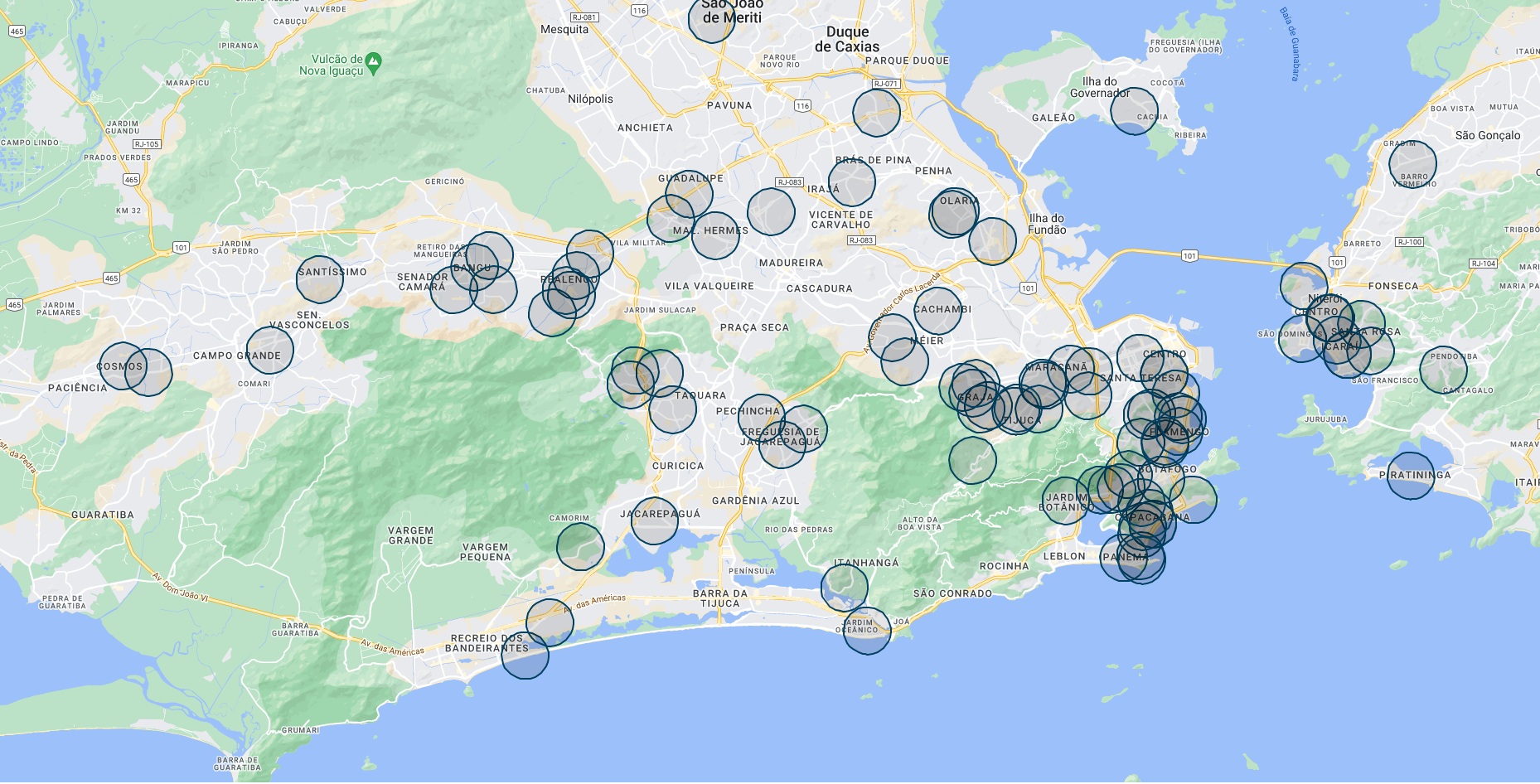
A georeferenced map compiling respondents’ places of residence and the urban spaces they valued, highlighting their sensitive perceptions and relationships of belonging in the city of Rio de Janeiro
A visual synthesis of the data collected in Stage 1, with automatically generated charts presenting participants’ profiles, affective categories, and spatial perceptions recorded during the pandemic
The preliminary results of this stage can be viewed in a video produced by the team of Undergraduate Research fellows
REFERÊNCIAS
Roberto DaMatta
A casa & a rua: espaço, cidadania, mulher e morte no Brasil (Rocco, 1997)
[The house and the street: space, citizenship, women, and death in Brazil – glossy only]
–
Marco Antonio Mello; Arno Vogel
A favela e o asfalto: um estudo sobre a habitação no Rio de Janeiro (Zahar, 1980)
[The favela and the asphalt: a study of housing in Rio de Janeiro – glossy only]
–
ETHEL PINHEIRO
Cidades ‘Entre’: dimensões do sensível em arquitetura OU a memória do futuro na construção de uma cidade
Tese de doutorado. Programa de Pós-graduação em Arquitetura da Faculdade de Arquitetura e Urbanismo da Universidade Federal do Rio de Janeiro (UFRJ), 2010.
[Doctoral dissertation. Cities ‘in-between’: sensitive dimensions in architecture or the memory of the future in the making of a city – glossy only]
ELECTRONIC SURVEY / 2020–2021
Pilot test
The team developed the revised methodology for the “Cartographies of interrupted stories” segment by formulating questions that could elicit both quantitative and qualitative responses. This first phase took place between April and May 2020, with remote team meetings to define the most suitable strategy.
Once the form was created in Google Forms, with requests for objective data and prompts for sensitive information (perceptions of the city, feelings related to lived experience, or memories of space), a pilot test was conducted in June 2020 with a graduate-student focus group. After adjustments, the survey was shared through social media and on the LASC research group website between August and October 2020.
Participatory georeferencing with Vicon SAGA
After the pilot test, the team identified that to enable effective analysis of spatial data and narrative categories, a platform supporting multi-user data entry and open-ended input was needed. This realization defined the process as “participatory georeferencing,” emphasizing shared creation and flexible data collection.
Since no single platform met both information collection and georeferenced visualization needs, the team divided the workflow across two tools. Google Forms gathered geoprocessed data, and ViconSAGA, developed by the partner Geo. Dr. Leonardo Muniz georeferenced the results. Using these tools, a new survey form was developed, with a Free and Informed Consent Statement aligned with Ethics Committee guidelines. The form included questions designed to elicit sensitive information about respondents’ relationships.
It was expected that the form would reveal stories of grief, loss, or a sense of distance from the city during the pandemic. However, a key finding was that such ‘interrupted stories‘ were less frequent than anticipated. Instead, analysis of survey responses and post-pandemic visits to popular locations demonstrated the enduring value and resilience of public space, as participants frequently highlighted positive experiences and attachments, even in challenging times.
Tabulation and spatialization of responses
After receiving more than 240 responses, mostly from residents of the Southeast Region, particularly from the city of Rio de Janeiro, it became possible to tabulate and analyze both quantitative and qualitative data.
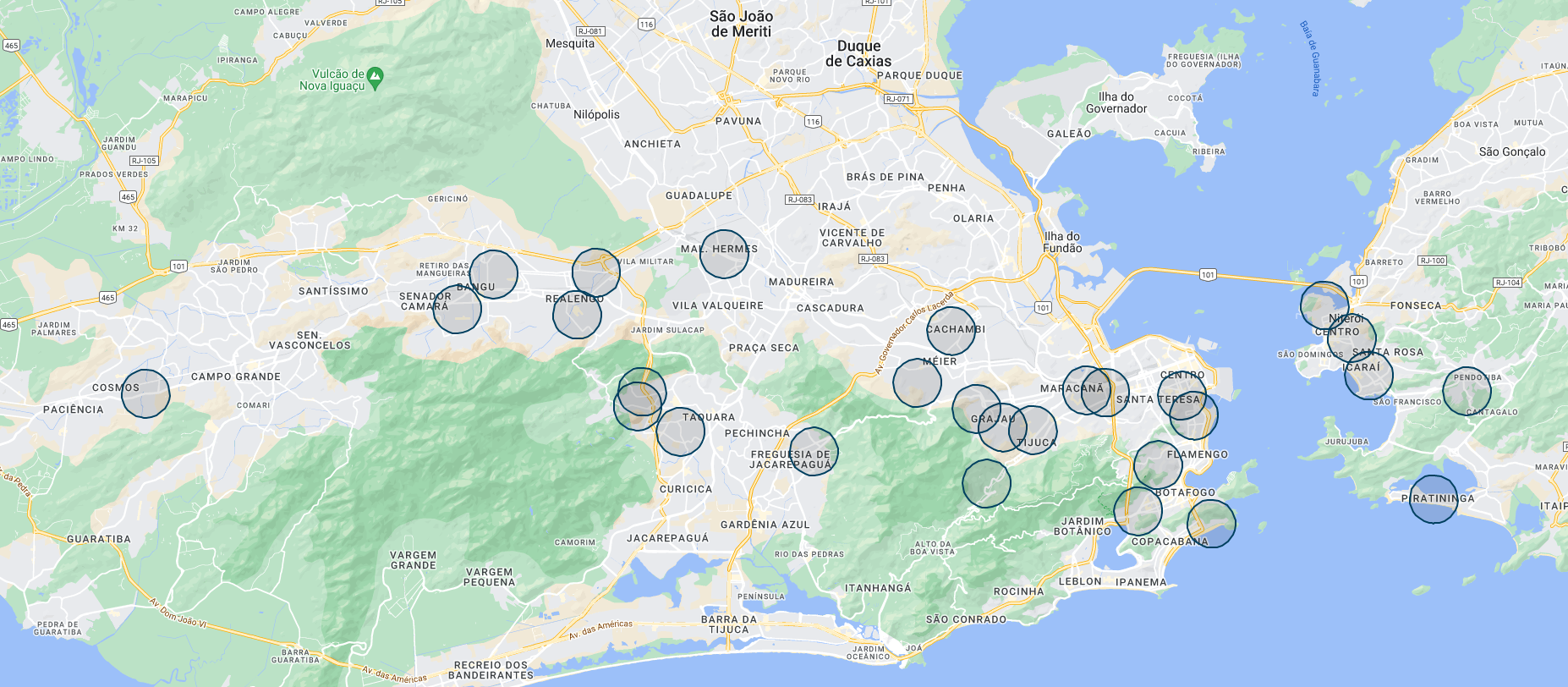
The ViconSAGA platform enabled georeferencing of responses and helped construct both geographical and affective cartographies. Each map point expressed sensations and relationships of belonging. These are related to either one’s ‘own home‘ or surrounding public spaces, represented by pink and blue on the chart.
The final dataset consolidated 128 responses from across the city, mapping both respondents’ places of residence and the urban spaces they valued. These points included neighborhoods such as Grajaú, Cachambi, Ilha do Governador, Urca, Botafogo, Copacabana, Mesquita, Deodoro, Realengo, Campo Grande, Duque de Caxias, Teresópolis, Petrópolis, and Volta Redonda.

Analysis of narratives and categories of spatial valuation
Based on the survey statements, the narratives expanded. Many included nostalgic references to public spaces as they existed before social isolation. A large portion of respondents associated their sensations with the “valued“ space of the home. There, they spent most of the day, seeking to reinterpret domestic life. In many cases, they incorporated the sidewalk or square in front of their residence as an extension of the household. This phenomenon appeared in both central and peripheral neighborhoods.
Most responses came from the city of Rio de Janeiro, followed by municipalities such as Duque de Caxias and Petrópolis. The second analytical step was to classify the locations mentioned as “valued home” and “valued place.”
Valued home: the domestic environment as the protagonist of sensitive relations.
Valued place: collective public spaces taken as symbolic extensions of the home in the pandemic context.
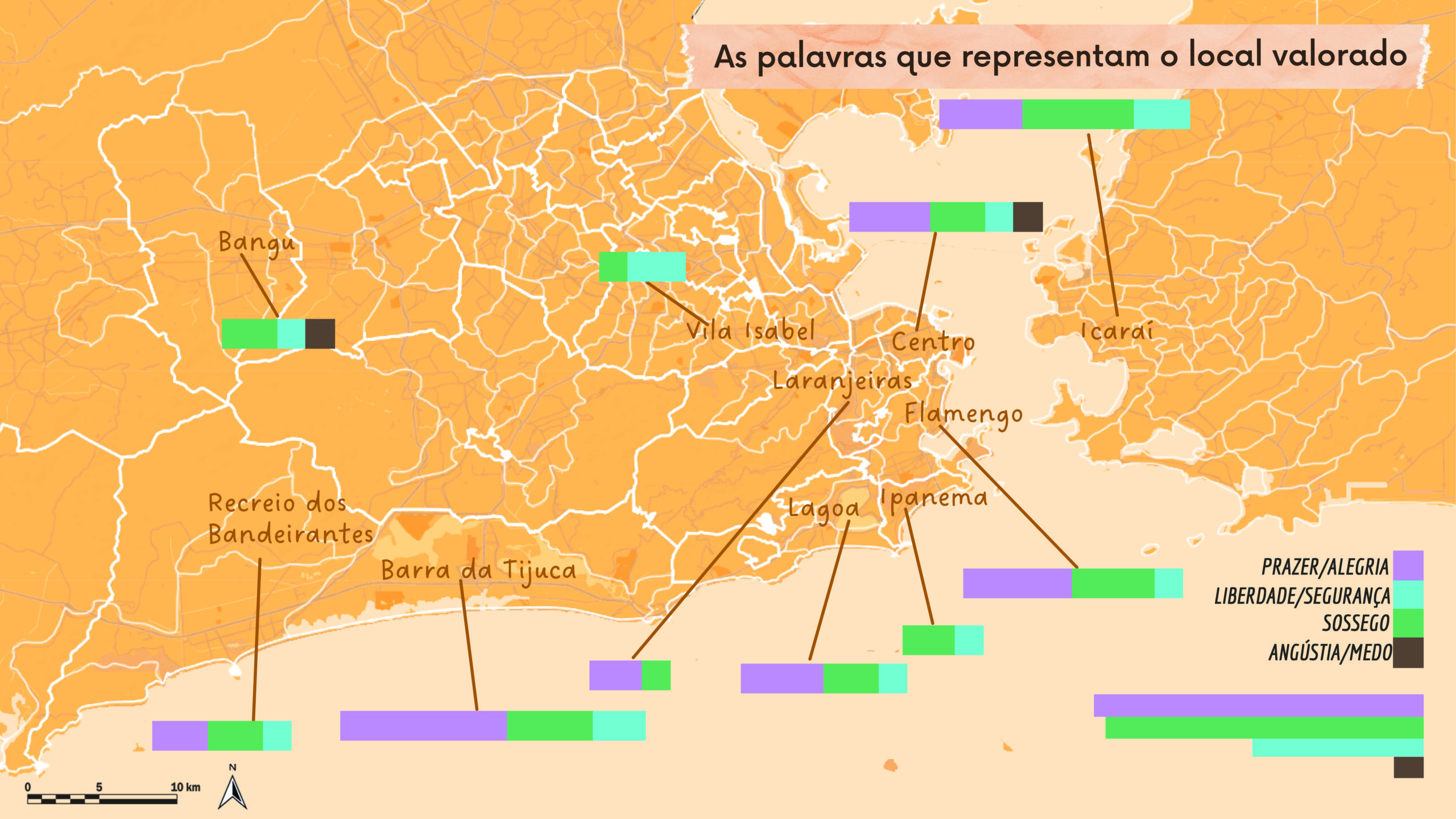
Notable places such as beaches, Cristo Redentor, the Rodrigo de Freitas Lagoon, and Sugarloaf Mountain were mainly featured in narratives by shoreline residents, for whom these landscapes were visible from their windows. Most respondents lived in South Zone neighborhoods (Ipanema, Copacabana, Laranjeiras, Flamengo). However, significant data also emerged from Cachambi, Vila Isabel, Barra da Tijuca, Recreio, and Bangu.
Sensitive relationships and emerging categories
The categories of “valued home“ and “valued place“ enabled the observation of nuances in the city’s sensitive relationships. The narratives revealed shifts in the perception of daily life and in the understanding of what constitutes a habitable place, indicating that narrating space had become a more poetic exercise, permeated by smells, sounds, and images incorporated as fundamental elements of each place’s experience.
For some respondents, the home was the space that provoked the most significant changes; for others, the loss of urban life was the most significant factor. Notably, expressions of grief or anguish were few and did not indicate substantial changes in the affective relationship with the city. Instead, the overall tone remained marked by a strong desire for movement and enduring hope, demonstrating continued emotional connection to urban life.
Responses expressing insecurity, fear, or distress were rare. When present, these were linked to respondents living in peripheral areas. In these regions, the notion of public space often blurs. “The street becomes home,” as Marco Antonio Mello and Arno Vogel (1980) might say.
Changes in daily life were grouped into analytical categories. When the concept of freedom emerged, open public space emerged as a form of release, and, in this sense, the presence of a liminality between inside and outside, public and private, or between ‘the home and the street‘ (DaMatta, 1997) was reaffirmed.
Drawing on the 2020 survey statements, researchers broadened the narrative scope. Many responses expressed longing for pre-pandemic public space experiences. Respondents projected sensations onto the ‘valued‘ space of the home, where they spent most of their time due to changes in routine. Many sought to re-signify domestic space by adopting the sidewalk or nearby square as their field of life. This was common across both central and peripheral neighborhoods in Rio de Janeiro.
Phase 2
PRODUction
A systematized map of fieldwork practices, in which sketches and ethnographic records are organized according to their territorial location
A synthesis of the stages and results of the research project ‘(Un)interrupted cartographies’, integrating narratives, spatial analyses, and ethnographic sketches. Presented at the UFRJ Academic Initiation Week (2023)
REFERences
WALTER BENJAMIN
O NARRADOR: CONSIDERAÇÕES SOBRE A OBRA DE NIKOLAI LESKOV
In ﹏. Magia e técnica, arte e política: ensaios sobre literatura e história da cultura. São Paulo: Brasiliense, 1994, p. 197-221.
[The storyteller: reflections on the works of Nikolai Leskov]
FIELD VISITS AND ETHNOGRAPHIC SKETCHES / 2022–2023
After analyzing the data and gaining insight into the “interrupted” city, the research moved into phase two, aiming to reveal how public life and urban practices changed during the pandemic. Beginning in 2022 in neighborhoods mentioned during quarantine, researchers revisited survey responses through deductive analysis and field visits. They organized the most-cited categories by neighborhood to guide their urban wanderings (errâncias urbanas) (Benjamin, 1994) and aligned findings with LASC/UFRJ theories.
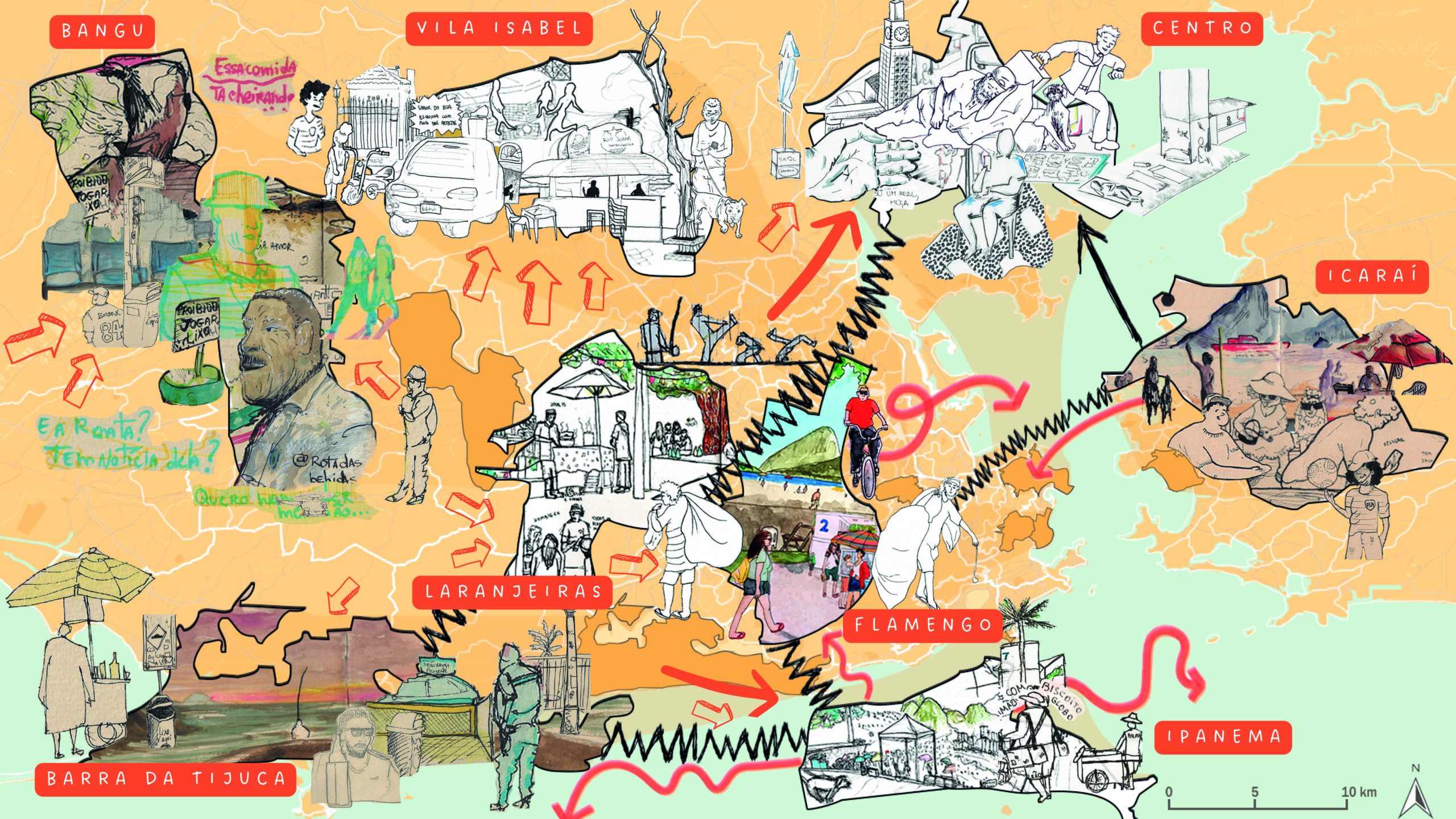
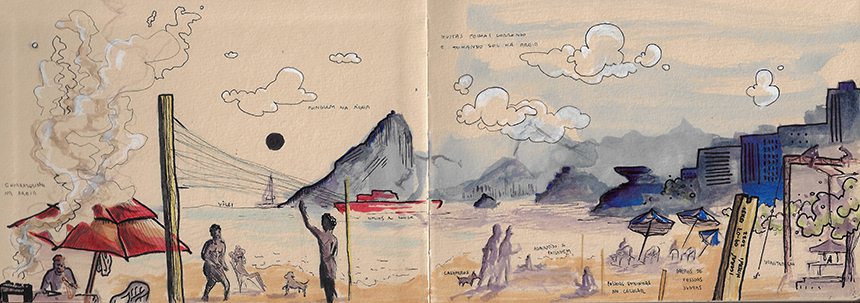
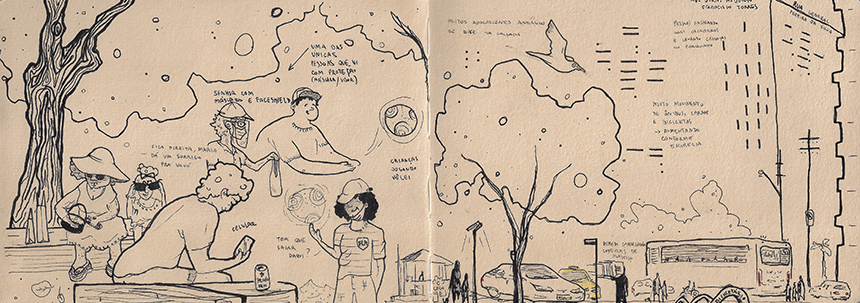
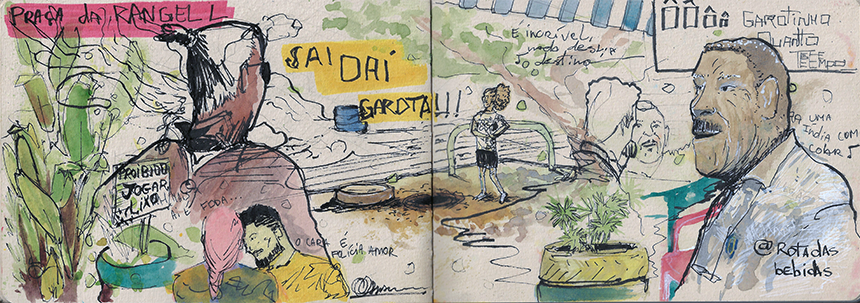
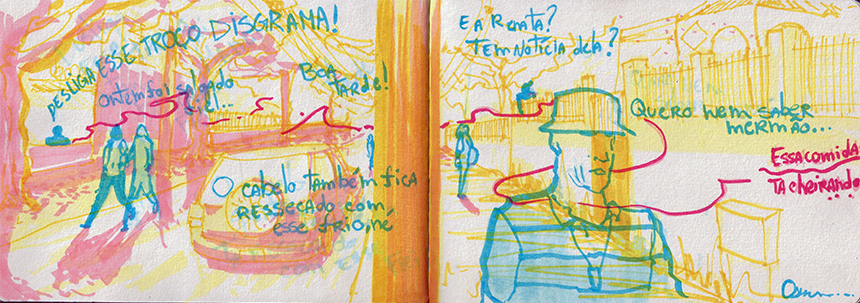
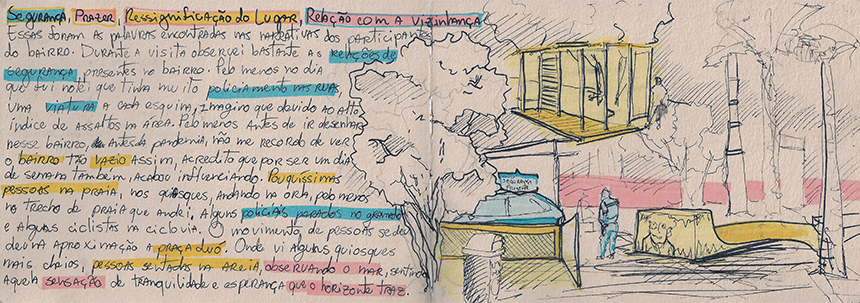
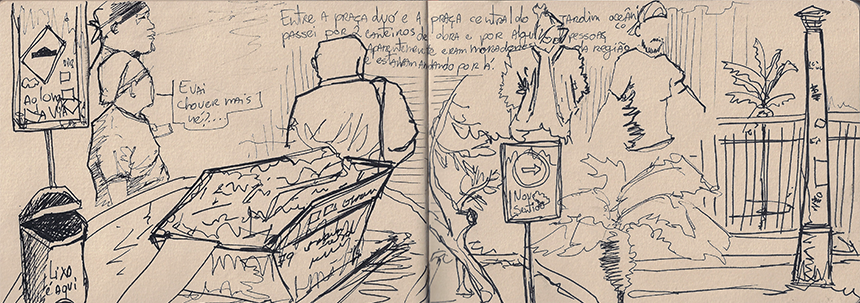
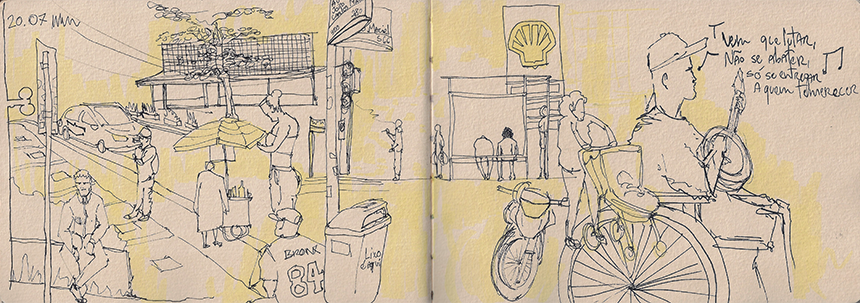
Ethnographic sketches clarified connections among categories and revealed which urban practices persisted and which transformed. Drawings illustrated changed routines in late 2022, while others remained unchanged. They showed increased vitality in public space, especially as a “source of safety,” in neighborhoods with fewer leisure options, such as those in the North Zone. This triangulation among survey, participant observation, and ethnographic sketching allowed classification of neighborhoods into those that adapt public life and those that reinforce prior narratives.
After identifying the most frequently mentioned neighborhoods, the team organized narratives emerging from each neighborhood into categories. The classifications unfolded from the themes Activities/Affects, among which the following stood out:
Absence/Longing
Confinement
Dwelling (citing the internal space)
Freedom
Isolation/Solitude
Interpersonal relations
Physical activities (outdoors)
Pleasure
Re-signification of place
Safety
The neighborhoods were divided among the participating researchers, with each responsible for conducting observations in specific locations previously defined by the group. To facilitate the connection between the mentioned neighborhoods, the city of Rio de Janeiro was divided into four sectors: Coastal, Central, North, and West.
Etnographic analyses and field observation
The field analysis sought to observe the appropriation of spaces, the activities taking place within them, and the affective relations that shaped such places, using cartographic and ethnographic tools. The sites were visited on different days and at different times to capture distinct ambiences. Thus, each public space was observed on more than one occasion: at least one visit between Monday and Friday; another on Saturday and/or Sunday; and additional records during both daytime and nighttime hours, allowing for an understanding of everyday uses as well as practices related to leisure, commerce, and circulation.
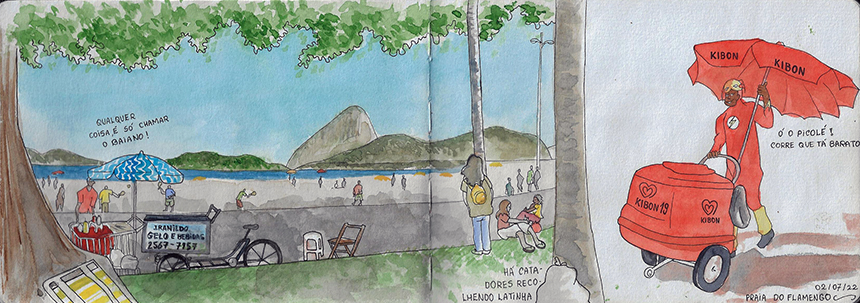
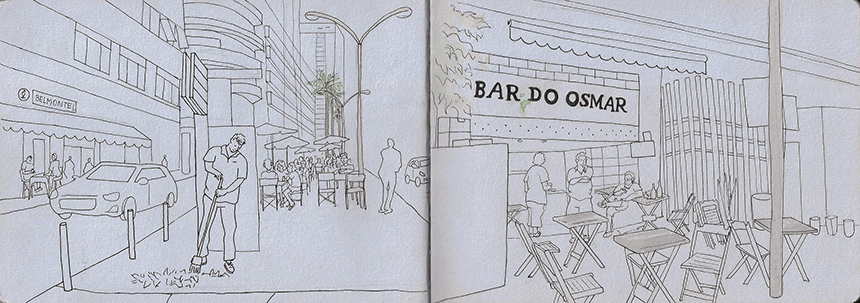
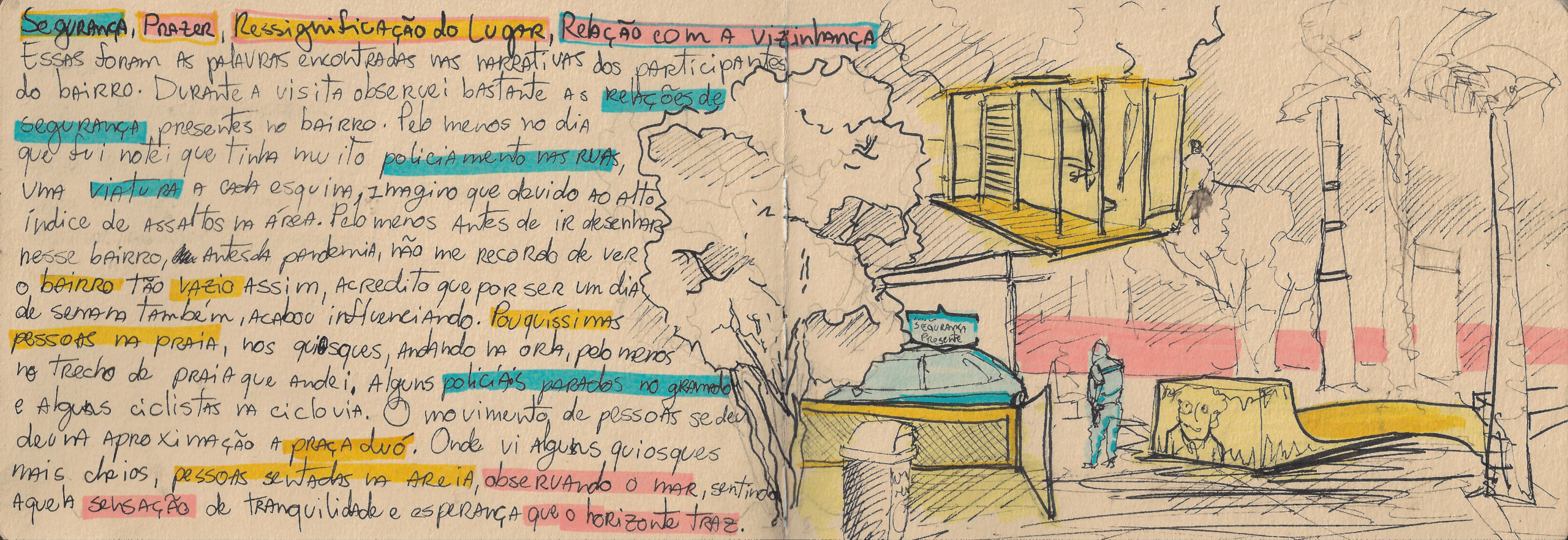
During the dérives, it became evident that in the Coastal Zone, especially where the beach plays a representative role, significant changes occurred in sensitive and spatial relations. In neighborhoods such as Barra da Tijuca, Ipanema, and Flamengo, the narratives evoked themes related to safety, pleasure, and interpersonal relations. The visits recorded emptier beaches, kiosks with little activity, and new modes of lingering. Moving deeper into the neighborhoods, a more intimate relationship emerged between residents and nearby squares and sidewalks. On weekends, beach use resumed, though at a lower intensity than before the isolation period.
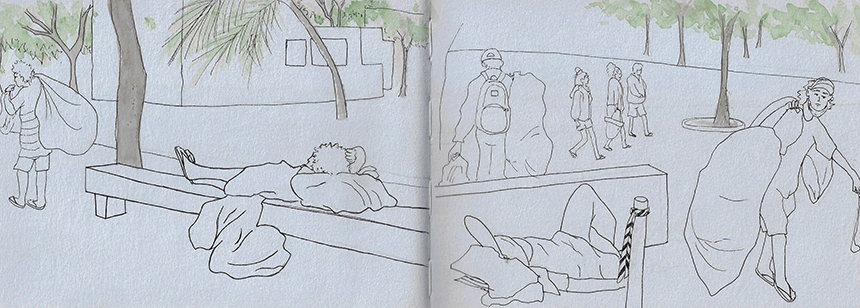
In central neighborhoods, relationships of distancing and processes of re-signifying place were identified. Feelings of absence and longing for experiences previously lived in public spaces revealed the impact of changes on social practices and urban vitality, an effect intensified by the increase in the number of people experiencing homelessness during this period.
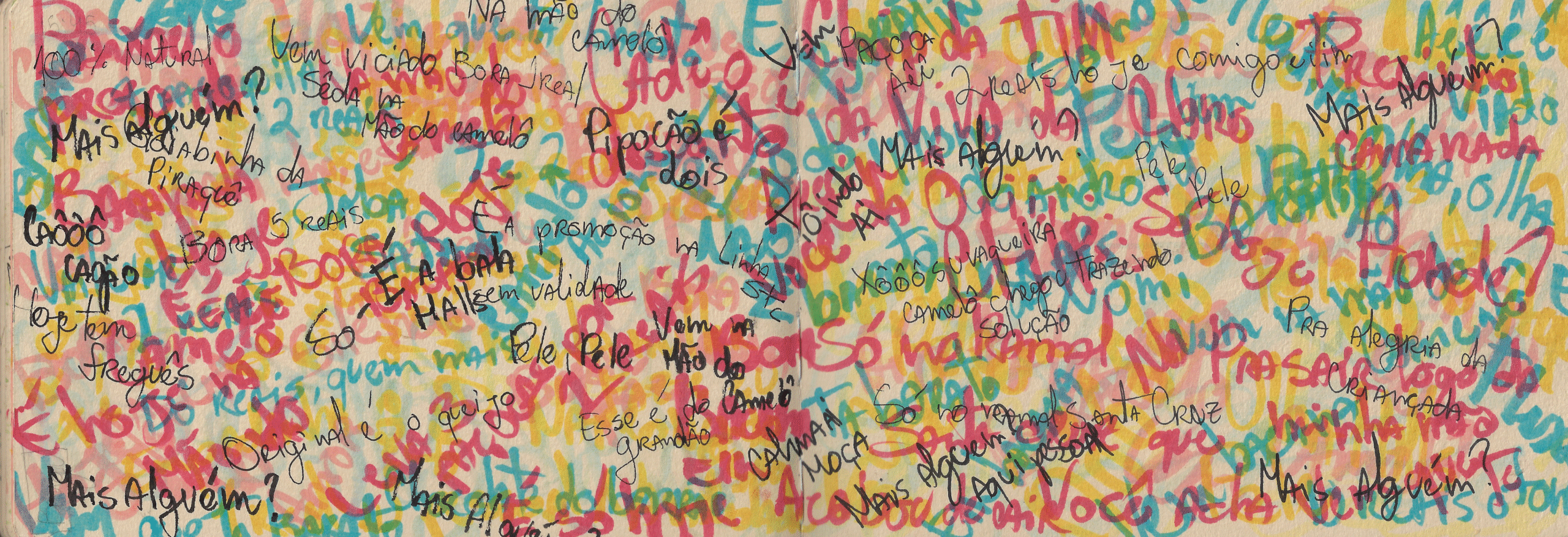
To guide inquiries from 2022 to early 2023, ethnographic sketches became a central tool for directly recording sensitive impressions. This graphic technique synthesizes memory from the observer’s perspective, linking drawing to movements in time and space. The expressiveness on paper extends visual perception, incorporating the subjectivities of the architect-ethnographer, who narrates memories that precede and follow the moment observed. The sketch positions the observer as a mediator between the event and their own sensations, an approach that aligns closely with the principles of this research and intending to promote a more humanized interpretation of urban space.
Results and sensitive interpretations of public life
The practices identified across different areas of the city enabled an understanding of how sensitive relationships were redistributed during and after the pandemic. In the coastal neighborhoods, changes in traditional beach use became evident, along with the strengthening of proximity-based relationships in sidewalks, squares, and small open spaces. In central neighborhoods, feelings of absence, longing, and re-signification prevailed in places previously associated with intense public life.
The classification of affects reinforced a key finding: to understand post-pandemic urban life, it is essential to view each neighborhood through the sensitive experiences of its residents. The main categories identified (absence/longing, freedom, interpersonal relations, isolation/solitude, pleasure, re-signification of place and safety) were central to this analysis. The findings also indicated that post-pandemic urban vitality relies not only on people returning to urban spaces but also on their subjective sense of belonging and recognition.
These results underscore the study’s primary finding: the sensitive dimension of city life is fundamental in shaping how people inhabit, sense, and imagine their place in post-pandemic cities. Urban sketches revealed ongoing and disrupted practices, but above all, highlighted the centrality of affective experience in understanding urban transformation.
Conclusions
Is there an “other city” within post-pandemic cities?
This study demonstrates that there is.
The methodological approach developed for “Cartography of interrupted stories“ enabled us to affirm, without doubt, that space is movement and that the notion of “home” is highly relative across different cultural contexts. Recognizing this helps us understand that Brazilian cities continue to resist, despite errors and setbacks of all kinds, the reality of October 2020, when hundreds of thousands of people were reported dead from COVID-19.
Such numbers could have generated feelings of reclusion, hopelessness, and insecurity as the most representative emotions among our respondents, but they did not. Instead, hope and re-signification proved stronger in every situation, expressed through efforts to find ways of using the city even amid the need for isolation, which, as we know, was not fully observed.
The social impact of consolidating a remotely developed yet still qualitative analytical method, alongside the acceptance of new concepts oriented toward the sensitive dimensions of the urban world, has strengthened the importance of public spaces in the post-pandemic context. This study, therefore, underscores the importance of the quality of collective environmental experience across the social, political, and scientific domains of Brazilian cities. It also makes clear that a new stage of research must now focus on the consequences of the transformed relationship with urban spaces in Rio de Janeiro and other Brazilian metropolises.